Hair and nail supplements are marketed aggressively across pharmacies, beauty retailers, and social media. Many products promise stronger nails, faster hair growth, improved thickness, and visible cosmetic transformation within weeks.
The marketing often implies that hair and nails can be “boosted” together through specialised nutrient blends.
There is some biological logic behind this idea. Hair and nails do share structural similarities and nutritional requirements. However, the evidence supporting commercial supplements is much more mixed than advertising suggests.
Understanding what hair and nails actually have in common helps explain why some deficiencies matter medically while many heavily promoted products remain poorly supported by strong clinical evidence.
Hair and nails are both made largely of keratin
Hair shafts and nails are composed primarily of keratin, a structural protein produced by specialised cells.
This shared composition explains why nutritional deficiencies sometimes affect both tissues simultaneously.
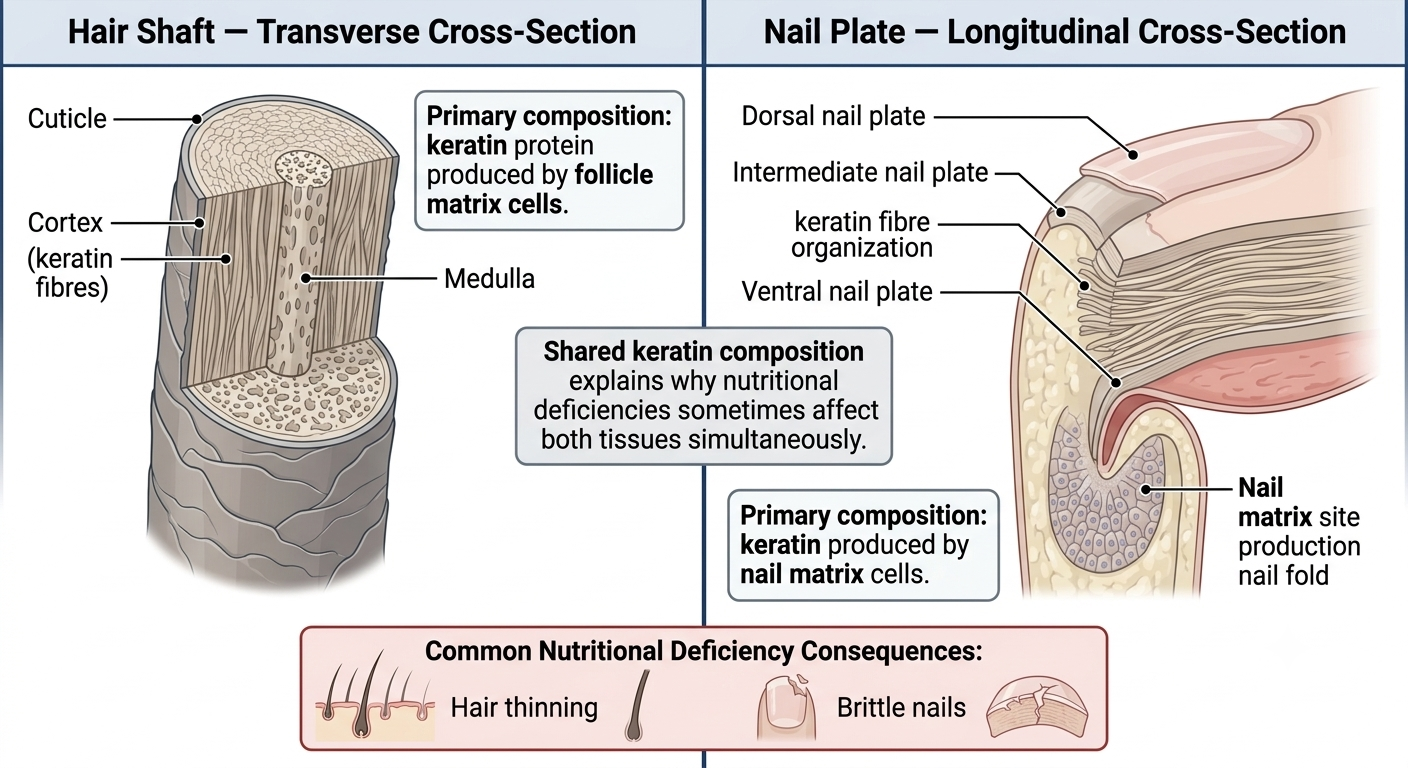
People with severe nutritional compromise may develop:
- Hair thinning
- Brittle nails
- Slow nail growth
- Increased breakage
However, healthy keratin production depends on overall physiology rather than one miracle ingredient.
Rapidly growing tissues need adequate nutrition
Hair follicles and nail matrices are metabolically active structures.
Both require:
Protein
Iron
Zinc
B vitamins
Energy availability
When the body lacks essential nutrients, these tissues may become vulnerable because they are not biologically prioritised during physiological stress.
Biotin is the most heavily marketed ingredient
Biotin is included in many hair and nail products because deficiency can affect both structures.
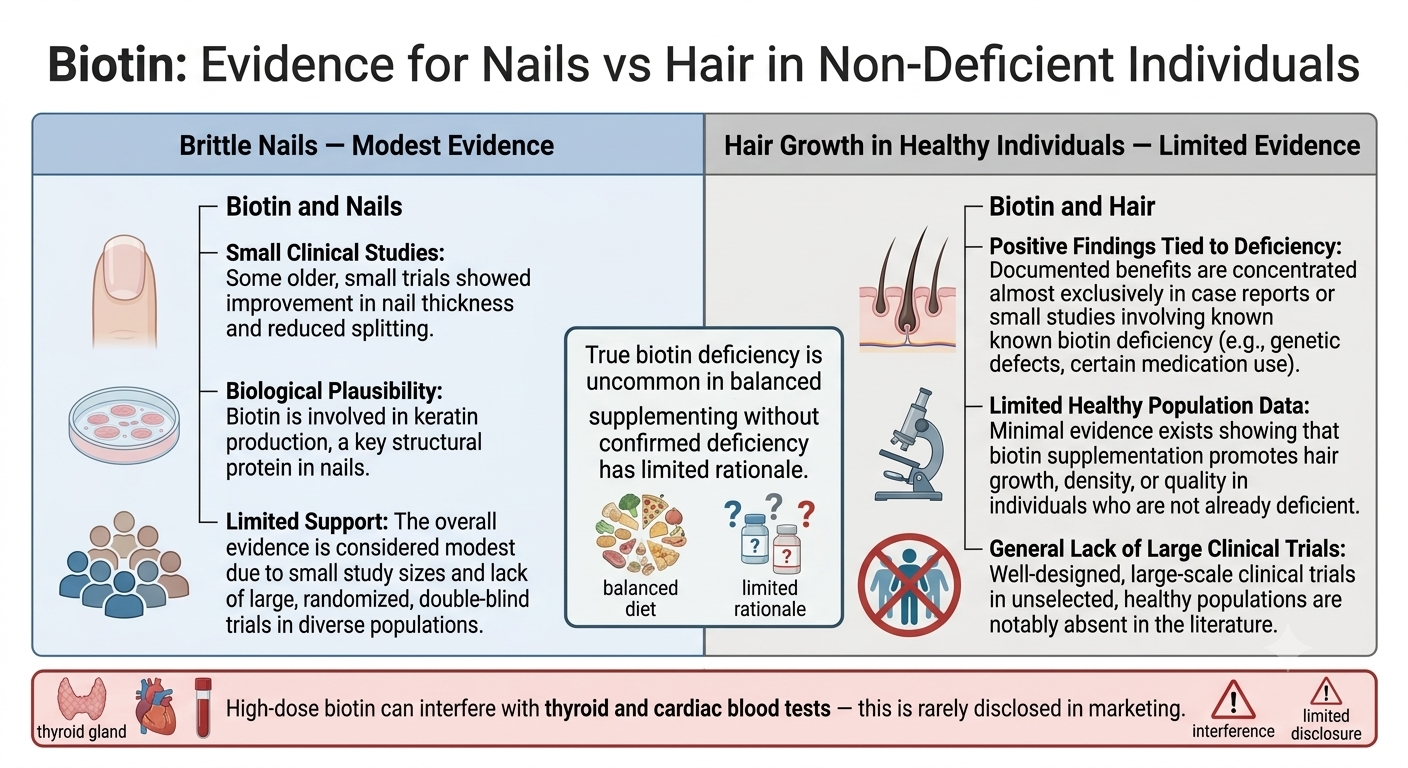
True biotin deficiency may cause:
Hair thinning
Brittle nails
Skin changes
However, genuine deficiency is relatively uncommon in healthy individuals eating balanced diets.
This distinction matters because evidence supporting high-dose biotin supplementation in people without deficiency remains limited.
Brittle nail improvement has some evidence
Compared with hair growth claims, biotin may have somewhat better evidence for improving brittle nails in certain individuals.
Some small studies have reported thicker or less fragile nails after supplementation.
The evidence is still limited overall, but it is not entirely without biological plausibility.
Hair evidence is less convincing in healthy people
For hair specifically, strong evidence supporting routine biotin supplementation in healthy individuals remains weak.
Most positive findings involve:
Deficiency states
Rare metabolic disorders
Patients with underlying nutritional compromise
This is very different from proving dramatic benefit in the general population.
Excess biotin may interfere with laboratory tests
High-dose biotin supplementation can interfere with certain blood tests, including some:
Thyroid investigations
Cardiac biomarker tests
Hormone assays
This rarely appears prominently in supplement marketing despite being medically important.
Iron deficiency can affect both hair and nails
Low iron stores are among the most clinically relevant nutritional findings associated with hair shedding.
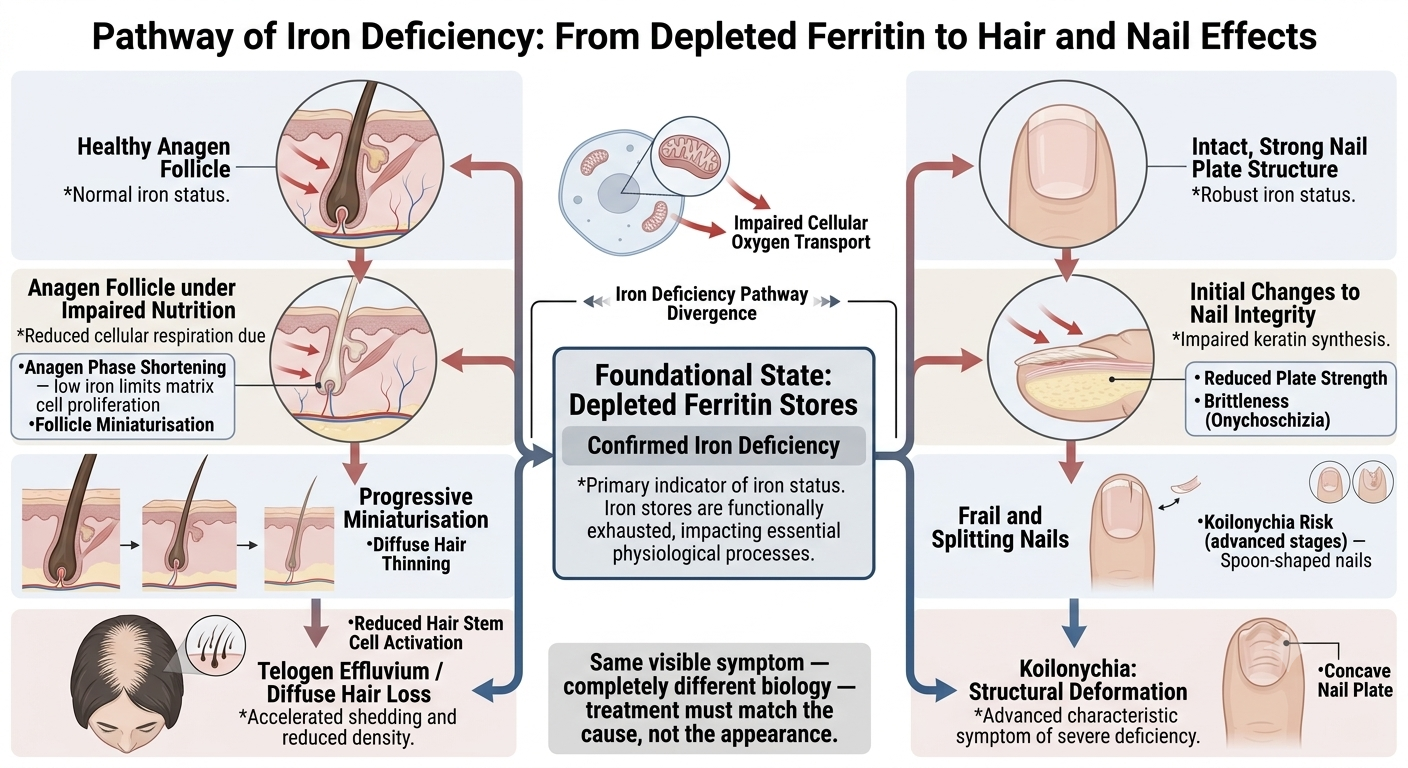
Iron deficiency may also contribute to:
Brittle nails
Spoon-shaped nails
Fatigue
Pallor
Correcting genuine deficiency may improve both hair and nail health gradually over time.
Zinc plays a role in tissue repair
Zinc contributes to:
Protein synthesis
Cell division
Immune function
Deficiency may affect rapidly dividing tissues including hair follicles and nail-producing cells.
However, excessive zinc supplementation can also create problems, including copper imbalance.
Protein intake matters more than many realise
Hair and nails both rely heavily on adequate protein availability.
Severe protein deficiency may contribute to:
Diffuse hair shedding
Weak nails
Reduced growth quality
This is particularly relevant during restrictive dieting or rapid weight loss.
Collagen supplements are widely promoted
Collagen powders and drinks are commonly marketed for “hair, skin, and nails.”
While collagen contains useful amino acids, strong clinical evidence showing dramatic improvements in hair growth remains limited.
The body breaks dietary proteins into amino acids regardless of whether they originate from collagen or other protein sources.
Faster nail growth does not necessarily mean healthier hair
Some people notice nail growth changes while taking supplements and assume hair improvement must therefore also be occurring.
But hair biology is more complex.
Nails and hair share certain requirements, yet follicles are influenced additionally by:
Hormones
Genetics
Inflammation
Immune signalling
This means nail response does not reliably predict hair outcomes.
Supplements cannot fully override genetics
People with androgenetic alopecia sometimes hope nutritional supplements alone will reverse hereditary thinning.
Adequate nutrition supports follicular health, but supplements cannot completely counteract genetically driven follicle miniaturisation in most cases.
Hair shedding has many causes
Not all hair loss is nutritional.
Common causes include:
Androgenetic alopecia
Telogen effluvium
Autoimmune disease
Thyroid dysfunction
Inflammatory scalp disorders
Supplements may do little if the underlying condition is unrelated to nutrient deficiency.
“More” is not always safer
Hair and nail products often combine multiple ingredients at high doses.
Excessive intake of certain nutrients, including:
Vitamin A
Selenium
may actually contribute to hair shedding.
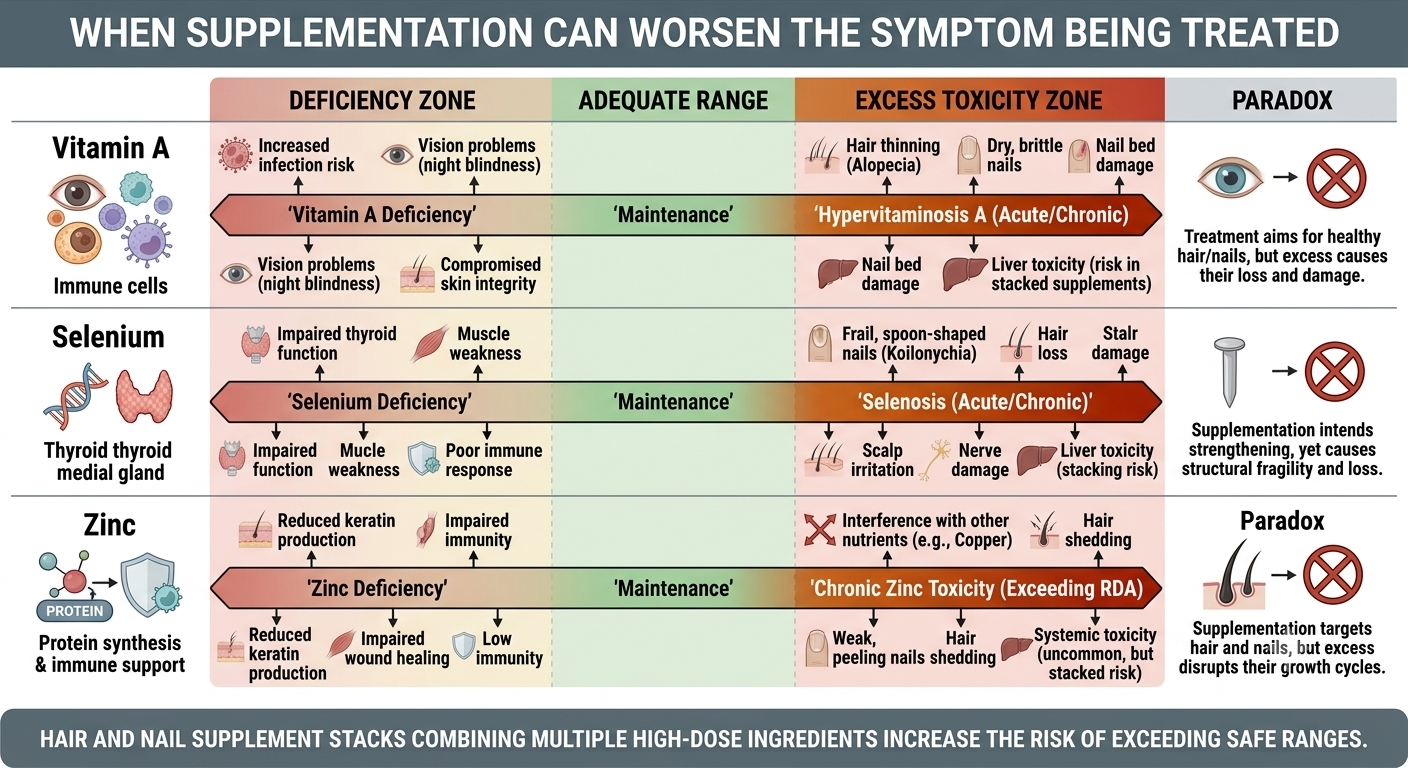
This creates a paradox where over-supplementation can potentially worsen the very symptom being treated.
Gummies are mostly a delivery format
Hair and nail gummies are popular largely because they are pleasant to consume.
The gummy format itself is not medically superior to capsules or tablets.
Many products also contain added sugar and flavouring while providing ingredient doses similar to standard supplements.
Improvement takes time
Hair and nail growth are both slow biological processes.
Even when correcting a true deficiency, visible changes may require several months because newly formed tissue needs time to emerge fully.
This delay often contributes to frustration and unrealistic expectations.
Blood testing can help guide treatment
Rather than taking multiple supplements blindly, doctors sometimes investigate persistent hair shedding or brittle nails with tests such as:
Ferritin
Vitamin D
Vitamin B12
Full blood count
Thyroid function
Identifying actual deficiencies is usually more useful than relying on cosmetic marketing claims.
Lifestyle factors matter too
Sleep, illness, chronic stress, restrictive dieting, and systemic disease may affect both hair and nails simultaneously.
Supplements alone rarely compensate fully for broader health disruption.
Cosmetic improvement and biological treatment are different
Some supplements may modestly improve nail strength or hair texture perception without fundamentally changing follicular disease processes.
This distinction is often blurred in advertising.
The bottom line
Hair and nails share important biological similarities because both rely on keratin production, protein availability, and adequate nutritional support. Deficiencies involving iron, zinc, protein, biotin, and other nutrients can affect both tissues simultaneously.
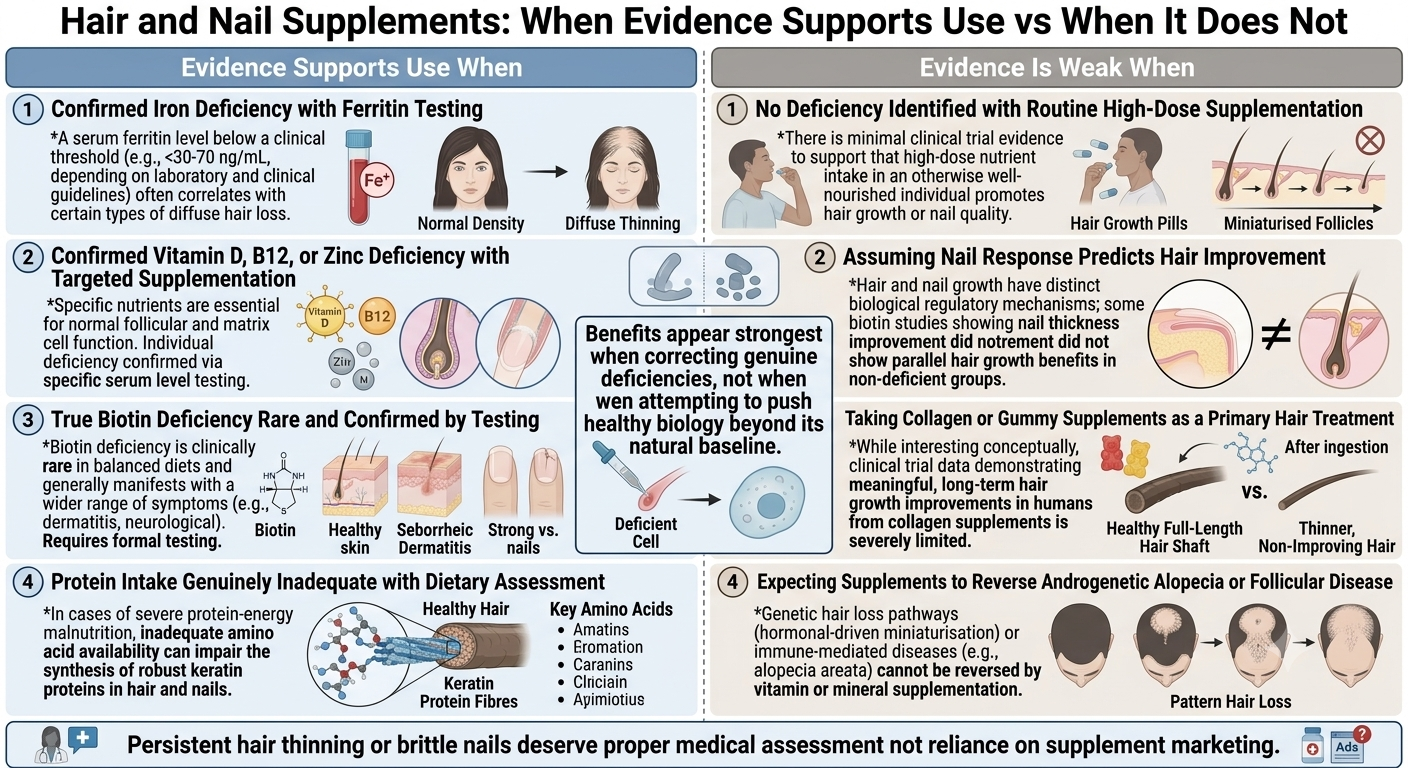
However, the evidence supporting routine high-dose hair and nail supplements in healthy individuals remains limited. Benefits appear strongest when correcting genuine deficiencies rather than attempting to push normal biology beyond its natural baseline.
For persistent hair thinning or brittle nails, proper medical assessment is usually more informative than relying solely on heavily marketed supplement combinations.
Author: Dr. Priya Goswami
Medical review: Dr. Denis Broun
Next step
If you notice coverage changes without increased shedding, confirm what process is occurring.
Take the Hair Assessment to have a physician review your pattern, identify whether miniaturization is present, and determine appropriate staging and next steps.
Add Comment